|
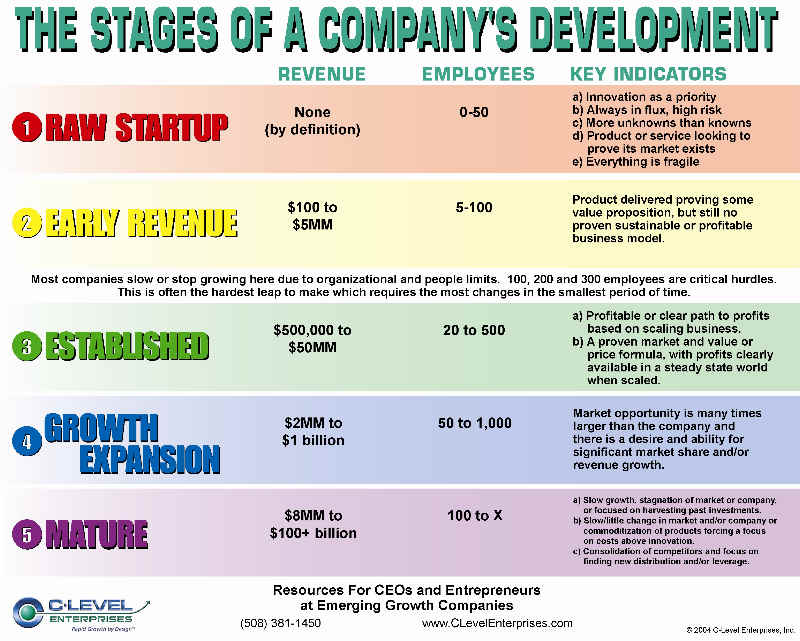
This series explores how leadership focus and skills must evolve as a company grows from a raw startup to an expansion stage successful enterprise. Last time we looked at leadership challenges at the formation stage of a raw startup (If you missed previous parts of this series first part you can read them here in the newsletter archive.) This week we will look at the appropriate leadership style in more depth for a Stage 2 company. Here is a summary of some of the key focus areas to be thinking about to be a successful leader in various stages of company growth.
Top Ten Rules of Leadership In Small Company Environments: 1. Always communicate your vision and objectives clearly. Using a management by objective system with monthly, quarterly, and annual goals forces clarity here. 2. Lead by example in areas like integrity, work ethics, and everything you do that is visible to your subordinates. 3. Solicit people's opinions and listen well. You can weight their input based on their experience and talent, but good people must feel they are heard if they are to follow a leader. You must be approachable if you are to be given all the information you need freely. People want to be sure you know what they know before they follow you into risky waters. 4. Only lead in areas where your expertise is excellent. No one wants to follow someone who does not know the terrain or where they are going. If you do not know an area well, defer the decision to an expert in that area unless you are really certain you understand why they are wrong because of a limited perspective on the decision. 5. Don't react negatively or punish people for disagreeing or dissent. Encourage dissent and open discussion. The last thing you want is to be surrounded by people who are afraid of speaking up. If the dissent is behind your back and done in a way that causes revolt and dissent among the troops that is a different story. Then you must act decisively to remove that person, as they are harming the company and your ability to lead it. 6. Let people make their own mistakes on a small scale to learn. Coach them, do not lecture them. Give them guidance and the authority to try things, help them develop a roadmap of WHAT must be done to succeed, but do not tell them HOW to do everything. Getting involved in every detail will not only hold them back but will cause them to lose the respect of all the people under them too. Always give full authority with responsibility. Your subordinates will never develop their skills if you closely direct or oversee their every move. 7. Focus your efforts on the critical areas that change as the company evolves. The areas of risk in any business change as the company moves from product development to delivery to scaling. You must know where your time is best invested at each stage. 8. Always scold in private and praise in public. Never embarrass anyone intentionally in front of others, but you must provide negative and positive feedback for people to grow. The sandwich technique (complement - criticism - complement) works well for lower level people with sensitive personalities, though these people are very hard to groom for senior levels of authority if they are not open to any criticism. 9. Never exact more privilege from your position than your subordinates are willing to grant. Taking too many special privileges drives a wedge between management and workers. Limit the privileges to less visible things, and provide superior pay for superior performance to allow senior people to do whatever they want on their personal time, but don't have them bragging about the airplane or cigarette boat they bought on the shop floor to everyone. 10. Show strong confidence, but not arrogance. People will not follow people who do not believe in themselves.
The book Leadership Secrets of Attila the Hun has many good maxims of leadership that apply to Stage #2 through Stage #4 companies. Although the title and image leave something to be desired in an enlightened world of management that has grown beyond dictatorial management styles, the issues of people following people are indeed timeless. Bob Norton runs the premier CEO & Entrepreneur Boot Camp in the U.S. today that trains leaders to grow companies more rapidly. He also offers a mentor and coaching program for entrepreneurs and CEOs at emerging growth companies. He can be contacted at bob@CLevelEnterprises.com.
The CEO & Entrepreneur Boot Camp - Previous Articles in This Series: "Leadership Focus Keys" The CEO & Entrepreneur Boot Camp
|